To be honest, I’ve never really considered myself a writer. My true love lies in speaking and I will likely always prefer the spoken word to the written. For me, the joy in words lies not in their beauty on the page but in the melodies they create as they are spoken into existence. I will oftentimes begrudge the difficulty of writing, frustratedly pronouncing that if only I could give a speech instead of write a paper it would be so much easier. In many ways, this bleeds into my writing style. I tend to write casually and conversationally, as though I were speaking. My writing has a prominent voice and my focus is typically more on word flow than content. In short, I like to write like I speak.
So when I first read the assignment to blog about coming of age stories, I was delighted. It was like the light had finally broken through after semesters of writing lab reports and technical papers; here was my chance to actually write stories. Sadly, I quickly realized that to write a story I first needed something to write about. My memories tend to be hidden away even from myself, it seems, and to dredge up an interesting story topic from my past was more difficult than I had imagined. Soon, I was disillusioned by the horrors of having to write about myself. Being asked to pour myself into a piece of work was not just demanding but incredibly difficult.
It took me weeks to muster the courage and stamina to write a single coming of age story, but I wasn’t dormant in the interim. I let myself focus first on the reading experience blogs, where I would try to respond to the literature as authentically and realistically as I could. With each post, I attempted to make sure that it was both personable and truthful. If I couldn’t figure out how to write my true thoughts about a book, I would never be able to write out a coming of age memory. And that’s where it began.
Eventually, I was able to move on to coming of age stories. I did the easy ones first. The familiar territory provided to be a good launching ground for more sensitive memories, culminating in one of my most dear memories and best experiences I’ve had. Still, when each blog was written, edited, fretted over, and finally posted, I allowed myself a huge sigh of relief. Writing isn’t easy for me.
Looking back over all I’ve written during the course of the semester, I’m surprised at the number of topics I managed to cover. In almost every story is a different side of me at a different age. Only when they’re put together can you truly begin to understand the complete scale of experiences that help create the man I am today. No piece manages to reflect my whole identity alone, but in conjunction with all the others, my identity becomes apparent.
In one of the wonders of writing and other forms of self-expression, my identity isn’t just revealed to those who read my stories. Through the writing process, I began to understand myself better and more truly grasp my identity. It’s easy to tell a story or to share a memory, but to unearth the complete spectrum of colors, sounds, sights, and smells requires an author to go back and relive where you can sometimes notice things you’ve never seen before. The forced three dimensional perspective on my coming of age stories somehow managed to create a three dimensional perspective on myself too. Writing coming of age stories practically became a coming of age moment in and of itself.
Now that it’s all said and done and the semester has reached its final days, I’m proud to say that I have grown in my writing abilities. The comfort I have with writing about myself has increased dramatically and I’m happier than ever with my abilities. I can only hope that my blog posts have been enjoyed and have been accurate depictions of who I am.
Friday, May 11, 2012

Here I Am (Final Coming of Age Story)
The memories come in fragments, as they
often do. I remember the story not as a flowing, eloquent tale but as the
halting, jerky travels as I leap from moment to moment. From image to image,
sound to sound, scent to scent, and feeling to feeling, I travel through my
past. The story comes to me not so much in words but as a collage of
experiences, washing over me in beautiful cacophony.
- - - - - -
I
have my fingers on the keyboard, but nothing to type. The words aren't there
and my mind feels cluttered. Somewhere deep in the recesses of my memory is the
story I'm trying to tell, but it resists my attempts to unearth it. I fidget
uncomfortably. I'm not used to being at a loss for words.
I
know the story, though. It's the story of a stubborn boy who thought he knew
what he was doing with his life. The plans were made and the time-line was laid
out all at the young age of seventeen. He was old enough choose for himself and
nothing could upset his perfectly crafted future. It would take more than soft
nudges and a quiet whisper to push him in a different direction.
Of
all the stories I could tell, this is the most important to me. That stubborn
boy was me.
So
I get up from my chair only to kneel down on the floor. I lean forward until my
forehead is resting on the ground and softly say, "Lord, I need the words.
I don't know how to tell the story, but I want to and I need to. Let me write
about you and how you whispered to me when I thought I knew it all. Let me
write a testimony to your power, your dedication, and your everlasting love. I
want to write our story."
The memories begin with a song. Before I
try again to write, I turn it on. It washes over me, the cool piano sounds, the
flowing strings, and the familiar lyrics. I can remember again. Images begin to
form and the words are suddenly available. I write.
- - - - - -
I
am standing in an unfamiliar sanctuary. The pews look familiar, but sanctuary
pews always look familiar to me. It's the same long bench and thin cushion I've
seen at a hundred churches, the same red bibles in the pew backs as I've read
my whole life. And standing alongside me, filling all of the pews and flowing
into the aisles are the hundreds of people joining me at Michigan's United
Methodist Annual Conference.
We
all spent the day together, sitting in an auditorium listening to propositions,
reading legislation, debating, and voting by holding up sheets of bright pink
paper. This is the deep inside of the church, the legislative body that meets
once a year to handle administrative tasks. My pastor asked me to attend and I
happily accepted, not anticipating how exhausting it could be to sit and keep
up with discussion. I was ready to leave before the closing worship service
even began.
The
bishop is standing at the front now, in a flowing white robe and with a red stole
hanging from his neck. He has a very round face only accentuated by his thick,
out of date glasses. Even with his slightly stooping stature, he looks regal as
he peers around the sanctuary and begins to speak. His voice is deep and
weighty and fills the room.
"There
are some here today who have felt the call to ministry," he said. "It
could have happened this weekend or it could have been on your heart for a long
time, but God has called you to a ministry in his church. If that's you, I want
you to come up to the front during this next song so one of us can pray over
you."
And
with a nod to the musicians on stage, he steps off to the side. A few tinkling
notes on the piano ushers in the song and the congregation is quick to sing
along. Not me, though. I'm too busy watching to see who will go to the front.
Watching and wondering if it should be me walking that way.
"I, the Lord of sea and sky, I have heard my
people cry," everyone sang.
There's
the first one. She's young, maybe twenty, with short dark hair and a nervous
walk well aware of how many people might be watching her make this journey.
"All who dwell in dark and sin, My hand will
save."
The
girl is joined by a boy. He's older and looks like the type of man who might
work in a car repair shop for a living, but he seems no less nervous making his
way to the front of the sanctuary than he would anywhere else.
"I who made the stars of night, I will make
their darkness bright."
I
want to join them, but I can't explain why even to myself. There was a time
when I thought I might want to be a pastor, but it was short lived and I
decided to leave the position for someone who was smarter, wiser, and surer of
themselves. Instead, I'm going to be an engineer and go build space ships. Or
boats. Or bridges. Or something. I dunno.
"Who will bear My light to them? Whom shall I
send?"
Me?
I can't become a pastor, much less walk down the aisle to the front of this
church. I can't. I won't. But I mouth the words "Whom shall I send?"
silently to myself, even as the song moves on to other lyrics. A part of me
seems to think I want to head for the front. I don't know why. I thought I had
my life figured out and this wasn't part of it.
I
feel frozen, as though this pew has latched onto me and won't let go. The music
keeps playing and the congregation keeps singing but I'm not paying attention
anymore. My eyes are trained on the front, waiting for someone else to come
forward.
But
nobody else steps up and pretty soon there are no verses left to sing. Everyone
fidgets slightly and a few people begin sitting down. I feel a sense of relief,
but tinged with regret. Regret that I didn't truly make a decision, that my
hand was forced by the length of the song.
And
as the last tones of the music is fading from the room, the bishop takes off
his glasses and looks across the rows of people.
"We're
going to sing that last verse again," he says. "I feel that there's
someone else who has felt the call but hasn't come forward yet." And he
peers around the sanctuary again, slowly, and I could swear he looks right at
me.
I'm
terrified. The bishop has never met me and has absolutely no idea who I am. So
did he really just look at me? Maybe I'm not containing my internal struggle as
well as I thought. Am I sweating? No. Have I let me face contort with
indecision? No again. Maybe he managed to lock eyes with everyone in the
sanctuary?
All
three hundred of us. Yeah. That's probably it.
And
that's what I try to believe. Still, I can't help but think that the bishop
wants me to come up just as much as I think I might want to go. The balance of
my internal battle has shifted as the bishop takes sides and makes a stance. But
I dig my feet in. I am not leaving this pew.
As
the verse comes to an end, I'm still in my spot. Victory, I think to myself.
But with the slightest lift of the eyebrow and a look at the crowd, the bishop
motions silently and everyone knows what he means. We sing the verse again.
I
will not leave this pew, I tell myself. I am going to be an engineer. I am
going to look back on this moment one day and laugh about how silly I’m being.
I glance towards the bishop and hope the look on my face tells him what I want
to say: I will not leave this pew. He’s not looking at me, but the message
remains.
And
when the bishop finally lets the song end, after the final words are spoken and
the stage has emptied, I am still in my pew.
- - - - - -
Time
passes in moments and instants and I try to forget. I try to forget the bishop’s
look. I try to forget the song they played. I try to forget how much I wanted
to walk to the front of the sanctuary. And more than anything, I try to forget
that I ever thought about becoming a pastor.
Yet
somehow it’s just a year later that I find myself again in an unfamiliar
sanctuary with the now familiar song playing. I’m in Saint Louis for a
conference about discerning a call to the ministry. Over the course of the weekend
there were workshops, speakers, worship services and small groups. I’ve had
fun. But that doesn’t mean I’m ready for the card I was just handed. Reading it,
I find I have three options:
1. I feel called into ordained ministry.
2. I do not feel called into ordained
ministry.
3. I am still discerning.
Each
has a little box next to the text. I guess I’m supposed to put a check mark in
one before getting up and turning it in to one of the baskets placed at
strategic points in the aisles. If it were a test question and if I were
guessing, I'd have a 33 percent chance of getting it right. But I’m not
guessing.
If
I’m honest with myself, I know the first box is the one I want to check. I
admit that I’ve known it since before the bishop first posed the question. But
I still don’t feel ready just yet to tell the world I want to be a pastor.
I’ve
spent months running from this question and these three boxes. I ran all the
way to college; I had been running when I chose majors and I had been running
when I first signed up for classes. When people asked if I wanted to be an
engineer, I always said yes. Even this day, with the song in my ears and the
card in my hands, I still might say yes. But I’m finally well aware that this
yes is nothing more than lip service in the hope that if I have a good plan
laid out for my life, I can keep running forever.
I
never thought all this running would take me to Saint Louis. Most of all,
though, I didn’t know that when the time came to make a decision, I’d still
have so much trouble continuing to run. But looking around at the room, I’m not
the only one struggling. The other hundreds of participants are hunched over in
their chairs, silently holding the card in clenched fists.
On
one hand, I know it’s time to stop and face the three little boxes. Still, the
decision scares me a little and I fear I don’t have the courage to make a
choice. I wish the bishop were here to look lengthen the song and look
pointedly at me. He would force my hand; he would push me through my trepidation
to a conclusion. But the bishop’s not here.
So
instead I sit in my seat, expectant and ready, like a runner at the starting
line. I’m crouched and tensed, waiting only for the sharp retort of a pistol.
Except I'm holding the pistol and I'm afraid to fire. At any moment, I might do
it. I might fire the pistol. I might check the box. Any moment now.
Everyone
around me seems to get up at once to turn in their card. They step over and
around me, trying to avoid tripping on my gangly legs. And as they file by, I can
see their faces, some apprehensive, some excited, and some clearly terrified
out of their minds. Now is the time, I need to choose an option - any one of
the three - and join the ranks of the decided, the checkers-of-boxes. I move
towards the first option, but stop to reconsider.
I
can keep running if I check the third box. It's not a yes or a no. It's not
even a maybe. The third option keeps up the illusion I've been trying hard to
maintain, that I really don't know what I want to do with my life. The third
box lets me keep saying that engineering is my backup plan until I hear
otherwise, without mentioning that I've got my fingers in my ears and am
humming loudly to keep from hearing anything else.
Taking
a deep breath, I check the first box. It is both terrifying and exhilarating. I’m
going to let myself become a pastor.
- - - - - -
Full
realization doesn't hit me until several hours later. I’ve taken a walk to
clear my mind, hoping to come to terms with what I've decided. I find myself
directly under the Saint Louis arch, the huge silver beam stretched across my
vision from left to right in a decidedly magnificent fashion. Standing in the
shadow of this magnificent creation, I feel happy. I’m not afraid, I’m not
excited, and I’m not even feeling particularly emotional. I just feel happy.
Looking
out over the Mississippi, I smile from deep within and whisper the final words
to the chorus I now know so well:
“I
will go Lord, if You lead me.
I
will hold Your people in my heart.”
I
sense that looking down from above, God is happy too. We both know I checked
the right box.
I’m
going to be a pastor.
Tuesday, May 8, 2012
Three Boxes (Coming of Age)
I had three options:
1. I feel called into ordained ministry.
2. I do not feel called into ordained ministry.
3. I am still discerning.
Each had a little box next to the line. I was supposed to put a check mark in one and then get up and turn the card into one of the baskets placed at strategic points in the aisles. There were only three options and if I was guessing, I'd have a 33 percent chance of getting the right one. But I wasn't guessing.
Even when I had first come to TCU, had first chosen my major, had first signed up for classes, I was running from these three boxes. If you had asked me then if I wanted to be an engineer, I'm sure I would have said yes. But that yes would have been nothing more than lip service with the hope that if I had good plan for my life laid out, I could keep running forever.
I never thought that all that running would take me to Saint Louis, where I would spend the weekend in a conference about discerning your call to ministry. And I sure didn't know that when the time came to make a decision, I'd have so much trouble continuing to run. Looking across the room, I wasn't the only one struggling. The other hundreds of participants were hunched over in their chairs, card held tightly in their fist.
The first box was the one I wanted to check. I knew that was the one I wanted, I had known it for a long time. But I didn't feel ready just yet to tell the world I wanted to be a pastor.
So instead I sat in my seat, expectant and ready, like a runner at the starting line waiting for the sharp retort of a pistol. Except I'm holding the pistol and I'm afraid to fire. At any moment, I might do it. I might fire the pistol. I might check the box. Any moment now.
Everyone around me seemed to get up at once to turn in their card. They stepped over and around me, trying to avoid tripping on my gangly legs. And as they filed by, I could see their faces, some apprehensive, some excited, and some terrified out of their minds. Now was the time, I needed to check a box - any box - and join the ranks of the decided, the checkers-of-boxes. I move towards the first option, but stop to reconsider.
I can keep running if I check the third box. It's not a yes or a no. It's not even a maybe. The third option keeps up the illusion I've been trying hard to maintain, that I really don't know what I want to do with my life. That engineering is my backup plan until I hear otherwise, not mentioning that I've got my fingers in my ears and am humming loudly to keep from hearing anything else.
I check the first box. It is both terrifying and exhilarating; full realization doesn't hit me until several hours later. I took a walk to clear my mind, hoping to come to terms with what I've decided. And I find myself directly under the Saint Louis arch, the huge silver beam stretched across my vision from left to right in a decidedly magnificent fashion. And looking straight up, I felt happy. I wasn't afraid, I wasn't excited, and I wasn't even feeling particularly emotional. I felt happy.
And I sensed that looking down from above, God was happy too. We both knew I checked the right box.
Monday, May 7, 2012
Space Camp II (Coming of Age)
I could see the neutral buoyancy tank from where I was sitting. Just outside the lunchroom and across the hallway was a window where you could peer right into the giant tank of water. Waiting in the clear blue depths was a little mock-up of a satellite and if you craned your neck just right you could see the space suits set out above the water and waiting for bodies to fill them. By donning the suit and submersing yourself in the water here at Space Camp you could simulate microgravity exactly like NASA astronauts do.
But I wasn't in the buoyancy tank, I was in the lunchroom. I had been herded in alongside a mass of my laughing and boisterous peers, though I was silent amid the noisy crowd. We had only been here for a few hours and hadn't even seen our suitcases, much less unpacked and settled in. And yet they all seemed so at ease, as though they all knew each other from another life and were just rediscovering old friends. Why weren't they scared, like I was? Didn't the shine and polish of the buildings intimidate them like it did me? My life started flashing before my eyes.
But not in the way it flashes when you're dying and you see everything that's happened to you over a long and fruitful life. I only saw a week, and not the week prior. It was that week. The long, lonely trials I could face at Space Camp. I could spend the week friendless and alone. I would be there, but only in body and just floating on the edges of the group. I was scared.
I sat down with my lunch at a mostly empty table both hoping and fearing that someone would come and sit with me. It was baffling to me that I could see no one who was just as uncomfortable as me, quietly and nervously contemplating the situation from afar.
Trying to hide my fear, I focused all of my attention on my food. I kept my head down and so I didn't see him sit down. But when I glanced up and across the table, he was sitting there. He was clearly older than I was and had no place sitting there, but that's exactly where he was. Across from me, with his elbows on the table and soft look on his face.
"Hey," he said.
I didn't want to think he was talking to me. I didn't know why he would be. So I looked around as though I didn't know how alone I was before looking back at him and saying, "Me?"
"Yeah, I just wondered why you were sitting all alone?"
"I dunno," I mumbled as looking down at the table. The answer hung in the air for a fraction of a second and I looked up and saw that this boy knew exactly what I meant even if I didn't say it. He knew that I had just flown on a plane alone for the first time in my life, that I was intimidated by the camaraderie that my peers had fallen into so easily, and that I was scared out of my mind but hardly even knew why.
He smiled at me and said, "Look, Space Camp can be one of the coolest things you'll ever do and you're going to have a blast this week. But you can't make any friends sitting by yourself and you won't have much fun unless you make a friend. So go sit with somebody. Talk to them, ask them how they're doin'. Make a friend. It'll be more fun if you do."
And with another smile and a little shrug, he stood up to sit somewhere else. Probably with somebody he never met before, I figured. Someone who he didn't know now but would turn out to be his friend later. This kid probably picked up friends like toddlers pick up germs.
I tried to discount what he said, tried to tell myself that I couldn't, wouldn't, and heck, shouldn't even try to make a friend. But the thought remained and taunted me. I wanted so badly to be just like I imagined this older boy to be.
So when dinner came and I was again herded into the lunchroom I knew I would have to go and sit with someone. If I didn't that boy might come and talk to me again and ask me why I was still alone, and I'd have less of a response than before. I couldn't let this nameless mentor down, so I gathered all the courage I could muster and sat by the least intimidating boy I could find and asked him the first question that came to mind:
"Hey, do you know if we get to go in the neutral buoyancy tank this week?"
Saturday, May 5, 2012
My Father and Psalm 127 (Coming of Age)
The picnic table was far from comfortable. The seat sagged slightly under my weight and the table surface was rough and uneven. I wanted to be lying down in my tent, just a few steps away. It was just a one man tent, only a few feet tall and lacking even the space to roll over, but I knew it would be far more comfortable than the bench I was sitting on.
My legs were aching. I had cycled over a hundred miles today and had pedaled my way four hundred miles in the past five days. Nothing seemed better than sliding into that tent and resting before the miles I would bike tomorrow. Looking around the table, I could see similar sentiments in all five faces. Yet here we were, pushing the exhaustion aside for just a few minutes to have a Bible study.
 |
| My dad and I on one of our training rides (because you can't ride 800 mi without training!) |
Which is not to say he was nerdy. My father, forty something years old, had biked that four hundred miles too. And there was still another four hundred to go before we got back home. But this night, halfway along the trip, he sat quietly for a moment and scratched the stubble that four days of camping and biking can bring. And in that moment, he looked apprehensive and even shifted slightly in his seat. The man who had led Sunday School classes since before I was born, who could preach a sermon both thought provoking and amusing should not have been nervous about something this laid back.
Flipping to that lone bookmark, my father introduced it as his favorite Bible passage. It was Psalm 127, and he began to read aloud:
"Sons are a heritage from the Lord,
children a reward from him.
Like arrows in the hands of a warrior
are sons born in one's youth.
Blessed is the manI looked up and made eye contact with my dad. He was crying. But he kept talking through the tears about how blessed he was to have the sons he did. And by the end of it all, I was crying too.
whose quiver is full of them.
They will not be put to shame
when they contend with their enemies in the gate."
Through my tears, the grass looked greener and the trees taller and my father looked more magnificent than he had ever looked before. I didn't feel tired any more. I had always known how much my dad loved me, never doubted it for a second. But to hear it in words, expressed eloquently and accompanied by tears meant so much more. He really loves me.
The Sixth Conversation - Food
It's funny to think that food can bridge such cultural boundaries when every country and region can have such a wide variety of dishes and favorites. Somehow, though, it manages to still connect people and be an incredibly fruitful conversation topic. Talking to Bandar today, it certainly became the focus of our discussion for a long while. I had just returned from a lunch banquet with some fantastic food and was excited to tell Bandar all about it. He countered by suggesting that I visit an Arabic restauant just downtown. The meals there are aparently fantastic and Bandar thought it would be good for me to try the food of another culture; I could only agree.
So I asked him what sort of meals his favorites where and what he missed the most since moving from Saudi Arabia. Bandar's eyes immediately lit up and he began to speak excitedly about a dish I could never hope to pronounce (let alone spell) but was a chicken and rice combination of some sort. It turns out that he just tried to make the dish the other weekend and he laughed and started to tell me the story of his attempt at cooking:
Bandar has never been a chef by any stretch of the imagination and had never truly made a meal in the kitchen before. He missed his favorite dish but it wasn't until he had guests coming over for a meal that he felt compelled to try his hand at making a culinary creation. The preparations began with gathering supplies, including not just food but also utensils, dishes, and the like for his previously unstocked kitchen. The meal preparation began early; Bandar knew that it would take him a long time to make the meal. Five or six hours before the meal was intended to be served, Bandar began cutting onions and preparing the chicken.
Eventually, the pan made it into the oven and all seemed to be going well. The aromas began to fill the house and Bandar felt good. When he pulled the chicken and rice out of the oven for the first time, the chicken wasn't done, but there seemed a simple solution. Back into the oven. Things still seemed pretty okay. But when the dish came out a second time, Bandar found that the rice had disintigrated and the chicken was overcooked and hardly edible.
And all Bandar's work got scraped into the trash. Fortunately, his guests were able to step in, remake the dish and the meal turned out fine in the end. It was a bit embarrassing and Bandar felt determined to master this dish, no matter how many attempts it would take.
Bandar and I laughed together over his cooking fiasco and I asked when he planned on trying again. With a smile and the shine of determination in his eye, he said that he was going to do it again tomorrow. But he hadn't set his hopes too high, he fully expected to fail once again. It would take him at least a few more mistakes to figure out how to master the recipe, but I could tell he would keep trying until he did exactly that.
The conversation continue on from that topic to Ramadan and essays, coffee and the weather, but it was the cooking story I enjoyed the most. I have never been good in the kitchen and I have had more failed creations than I can count. To my eternal shame, I have been known to have difficulty with boxed macaroni and cheese. I felt close to Bandar in that moment, and that's how I'm going to remember our conversations this semester. We've come so far from the awkward first meeting.
Bandar said he was going to miss having these conversations and I could only agree. I haven't the slightest idea whether it's helped him with English, but I enjoyed the chance to meet a incredible person here from another country.
Tuesday, April 24, 2012
The Fifth Conversation - Cars
Despite living in Michigan for essentially my entire life, I just don't do cars. I like them and all and I enjoy driving, it's just that everyone there knows far more about cars then I do. It's the auto state of the nation, the home of both Ford and GM and more of their employees than you can possibly imagine. A true Michigander can talk about cars for longer than most normal people can stay awake on an average day. My older brother prides himself on being able to identify the make and model of a car based on its headlights in the dark. There's no way I could do that. I can barely tell the difference between a Honda and a Chrysler.
So when Bandar started off our conversation today by talking about cars, I felt completely out of my element. He said he was looking at buying a car and wanted to know which one had the most easily replaceable parts. Not the most cost effective, not the one with the best gas mileage, not the safest, not the fastest, no. Why was this the most important attribute in Bandar's mind?
I asked and he said that at least in Saudi Arabia when a car part breaks it can take weeks or months to get it replaced, all depending on the type of car. Surely, I asked, that still wasn't as important as gas mileage. Replacing parts only matters when something breaks, but gas mileage matters every time you have to fill up your car with gas! But in Saudi Arabia, of course, gas isn't as expensive. It's an oil nation and the cost isn't nearly as inflated as it is here.
It made sense, but when I asked Bandar just how expensive gas was in Saudi Arabia I certainly wasn't ready for the numbers he tossed at me. While in American it might take 45 or 50 dollars to fill up a car's gas tank it would be a mere 7 dollars across the pond in Saudi Arabia. I sat there in stunned silence as Bandar thought for a moment and then amended his statement to the even lower $5.50 or $6. I could hardly believe it.
He went on to joke that if the rest of the world ever found a reasonable alternative energy supply, his country's economy would tank. At least, Bandar laughed when he said it, but I'm not so sure it was a joke. Without the country's oil exports there'd be no money for a lot of things, most notably the scholarships paid to students studying abroad. Students like Bandar. I was reminded of my own state, devastated when its powerful car manufacturers went under and had to lay off so many employees. To this day, the economy hasn't recovered.
Over our weeks of conversation, Bandar and I have talked about a lot of differences between our countries. We've considered the differences in laws, in city types, in jobs, in education, even the difference between our driver's licenses (in Saudi Arabia your license doesn't act as an I.D., you need a separate card), but nothing drove home the point quite like this discussion about oil. I don't know why knowing the gas price in Saudi Arabia had such an effect, but it did.
It almost seems like a fairy tale I'd sarcastically tell: "Once upon a time, in a land far away, you could fill up your car's gas tank for only seven dollars. And everyone was rich because they spent so little on gas. And they were happy. The End."
Our countries really are incredibly different places. We come from wholly different backgrounds, different cultures, different families, different climates, and even places with drastically different gas prices. And yet, when Bandar insisted on buying me coffee and we both walked out holding coffees in our left hand and talked about how little we were looking forward to the summer heat, I was reminded of just how similar we are too.
So when Bandar started off our conversation today by talking about cars, I felt completely out of my element. He said he was looking at buying a car and wanted to know which one had the most easily replaceable parts. Not the most cost effective, not the one with the best gas mileage, not the safest, not the fastest, no. Why was this the most important attribute in Bandar's mind?
I asked and he said that at least in Saudi Arabia when a car part breaks it can take weeks or months to get it replaced, all depending on the type of car. Surely, I asked, that still wasn't as important as gas mileage. Replacing parts only matters when something breaks, but gas mileage matters every time you have to fill up your car with gas! But in Saudi Arabia, of course, gas isn't as expensive. It's an oil nation and the cost isn't nearly as inflated as it is here.
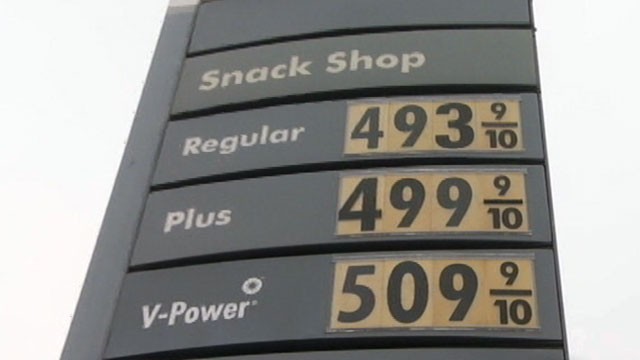 |
| Gas prices in the United States are pretty high! |
He went on to joke that if the rest of the world ever found a reasonable alternative energy supply, his country's economy would tank. At least, Bandar laughed when he said it, but I'm not so sure it was a joke. Without the country's oil exports there'd be no money for a lot of things, most notably the scholarships paid to students studying abroad. Students like Bandar. I was reminded of my own state, devastated when its powerful car manufacturers went under and had to lay off so many employees. To this day, the economy hasn't recovered.
Over our weeks of conversation, Bandar and I have talked about a lot of differences between our countries. We've considered the differences in laws, in city types, in jobs, in education, even the difference between our driver's licenses (in Saudi Arabia your license doesn't act as an I.D., you need a separate card), but nothing drove home the point quite like this discussion about oil. I don't know why knowing the gas price in Saudi Arabia had such an effect, but it did.
It almost seems like a fairy tale I'd sarcastically tell: "Once upon a time, in a land far away, you could fill up your car's gas tank for only seven dollars. And everyone was rich because they spent so little on gas. And they were happy. The End."
Our countries really are incredibly different places. We come from wholly different backgrounds, different cultures, different families, different climates, and even places with drastically different gas prices. And yet, when Bandar insisted on buying me coffee and we both walked out holding coffees in our left hand and talked about how little we were looking forward to the summer heat, I was reminded of just how similar we are too.
Subscribe to:
Comments (Atom)